Let's talk about your smile: (330) 896-0600
Future Smiles Start Early: Why Age 7 is Crucial for Orthodontic Health


As parents, we’re naturally focused on our children’s health and development; their smiles are a big part of that. While regular dental check-ups are essential from a young age, many parents wonder when the right time is for their child to have their first orthodontic evaluation. The answer, recommended by the American Association of Orthodontists (AAO) and supported by most orthodontic professionals, might surprise you: by age seven.
You might be thinking, “Seven? That seems so young! Don’t children usually get braces as teenagers?” And you’re not wrong – comprehensive orthodontic treatment often happens in the adolescent years. However, an initial evaluation at age seven isn’t necessarily about immediate braces. It’s about early detection and, if needed, interceptive care.
At What Age Should a Child First See an Orthodontist?
The American Association of Orthodontists recommends a child’s first orthodontic evaluation by age seven. This early assessment allows orthodontists to identify potential issues with jaw growth, emerging bite problems, or significant crowding while a child’s bones are still developing. Catching these concerns early can lead to more straightforward, less invasive, and more effective treatment, sometimes avoiding more complex procedures later in life.
Why Age Seven is the Magic Number?
By the age of seven, most children have a mix of primary (baby) teeth and permanent adult teeth that have begun to erupt. This specific developmental stage provides the orthodontist with a crucial window to:
- Assess Jaw Growth and Development: The orthodontist can evaluate if the jaws are growing correctly and are proportional to each other. Issues like underbites (lower jaw protruding) or crossbites (upper teeth biting inside the lower teeth) can often be addressed more easily while the jaw is still developing. Early intervention can guide jaw growth, potentially preventing more complex problems or even surgery later in life.
- Identify Emerging Bite Problems: While teeth might look relatively straight, there could be underlying bite issues that an untrained eye wouldn’t catch. These include open bites (front teeth don’t meet), deep bites (upper teeth severely overlap lower teeth), and functional shifts (jaw shifts to one side when biting). Addressing these early can improve chewing, speech, and overall oral function.
- Check for Crowding or Spacing Issues: The orthodontist can estimate if there will be enough space for all the permanent teeth to erupt correctly. If severe crowding is anticipated, early intervention can create necessary space, potentially reducing the need for permanent tooth extractions later. Conversely, excessive spacing can also be evaluated.
- Spot Harmful Oral Habits: Persistent thumb or finger sucking, tongue thrusting, or mouth breathing can significantly impact jaw development and tooth alignment. An orthodontist can identify these habits and recommend strategies or appliances to help break them before they cause irreversible damage.
- Monitor Tooth Eruption Patterns: Early or late loss of baby teeth, or permanent teeth coming in at abnormal angles or positions, can be red flags. The orthodontist can monitor these patterns and intervene if needed to guide the permanent teeth into their correct places.
What Happens at an Early Orthodontic Evaluation?
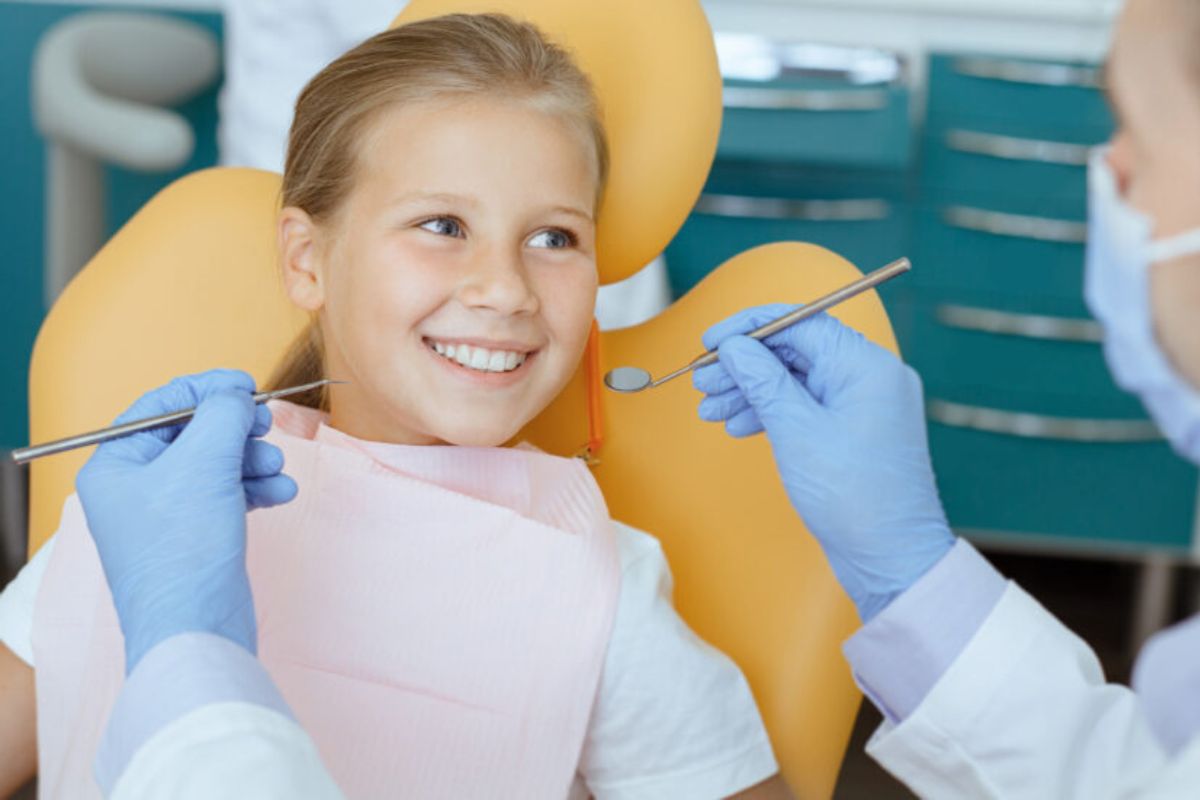
A child’s first orthodontic visit is typically a low-pressure, informative experience. The orthodontist will perform a thorough examination, which may include:
- A visual assessment of the teeth, gums, and bite.
- Taking X-rays to see unerupted teeth, root development, and jaw structure.
- Discussing the child’s medical and dental history.
Often, no immediate treatment is necessary. The orthodontist might recommend monitoring your child’s growth and development with periodic check-ups. If an issue is identified, they will explain the problem, discuss potential treatment options (which might involve a “Phase One” or “interceptive” treatment, usually with limited appliances), and explain if and when comprehensive treatment (like braces) might be needed in the future.
In conclusion, an early orthodontic evaluation by age seven is a proactive step in safeguarding your child’s oral health and overall well-being. It’s an opportunity to catch potential problems before they become more severe and complex, often leading to simpler, less invasive, and more cost-effective treatment in the long run. Don’t wait for all the permanent teeth to come in or for a noticeable problem to arise; a timely “first look” can make all the difference in achieving a lifetime of healthy, beautiful smiles.